Paul’s Thorn In The Flesh-When You Are Weak-God is Strong
Paul’s Thorn in the Flesh- When You Are Weak- God Is Strong– Believe it, live it, and survive those things that try to keep you bogged down and make you feel helpless. Often we learn valuable lessons the hard way. Christ is always stronger than anything that can touch our lives when we believe in Him; in His own time, and His own way.
Paul’s Writings Give Us an Example of Christ’s Strength:
In 2nd Corinthians 12:7–10, the message is that his agonizing, unremoved “thorn in the flesh” was permitted by God to prevent pride. When God refused to remove it, Paul learned that divine grace is entirely sufficient, and that human weakness allows Christ’s power to operate perfectly.
While the overarching theme of 2 Corinthians 5–10 centers on Paul defending his apostolic ministry, the specific passage on the “thorn in the flesh” (2 Corinthians 12:7–10) carries profound theological messages:
- The Purpose of the Thorn: Paul describes the thorn as a “messenger of Satan” meant to harass him. Its primary goal was to keep Paul from becoming too prideful or conceited following the extraordinary spiritual visions and revelations God had given him.
- Unanswered Prayer: Paul pleaded with the Lord three separate times to take the thorn away, but God ultimately said “No”.
- Sufficient Grace: Instead of eliminating the pain, God promised Paul, “My grace is sufficient for you, for my power is made perfect in weakness.”
- Paradox of Strength: Paul’s realized that true spiritual strength relies entirely on surrendering to human limitations. By embracing hardships, insults, and afflictions for Christ’s sake, Paul concluded, “For when I am weak, then I am strong.”
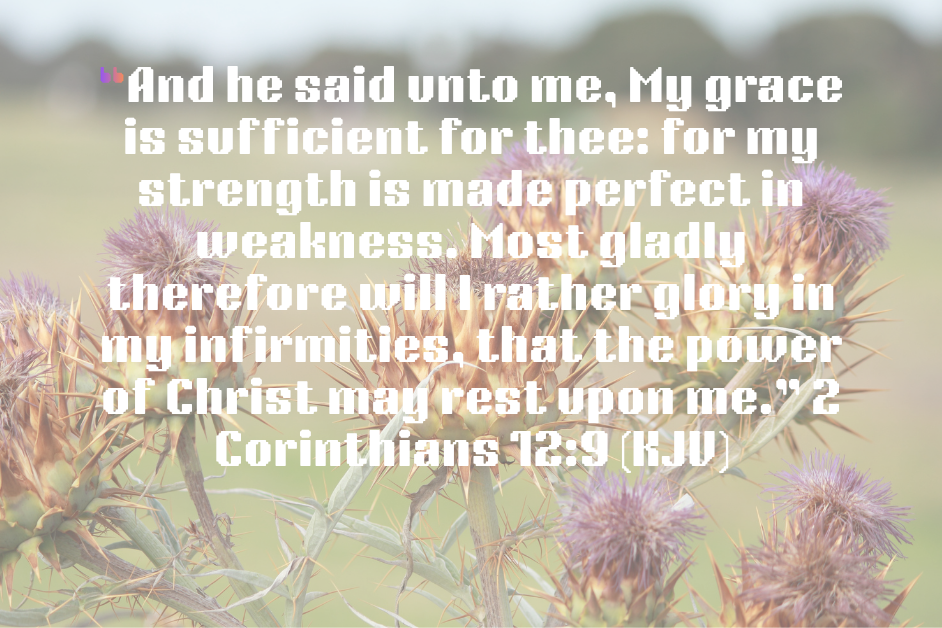
“And he said unto me, My grace is sufficient for thee: for my strength is made perfect in weakness. Most gladly therefore will I rather glory in my infirmities, that the power of Christ may rest upon me.” 2 Corinthians 12:9 (KJV)
The Nature of Paul’s Thorn
The scriptures never explicitly defined the “thorn in the flesh,” which has led to centuries of speculation. Scholars and theologians generally divide the theories into three main categories:
- A Physical Illness or Malady: Such as a chronic eye disease (indicated by Galatians 4:15), malaria, migraines, or epilepsy.
- Persecution and Opposition: Physical suffering, imprisonment, and opposition from opponents undermining his ministry.
- Spiritual or Psychological Struggles: Lingering temptations, deep anxiety, or persistent spiritual attacks.
Applying This to Your Life
Humans sometimes face seasons of life that are disputable, dispictable, and without merit. What affects one person might not affect another, and you may want to run away and hide. This is how life lessons teach us that running away from our problems does not resolve them.
Then there are times in life that we have brought situations into our lives because of our weaknesses, lack of wisdom, and lack of walking afar off from the Lord and His commandments. These things do not always have a quick or immediate solution. They sometimes linger and fester and cause distress and pain.
The Lessons We Learn
Purpose Over Relief
- Growth beats comfort: God prioritizes your character development over your immediate personal comfort.
- Protection from pride: Success can breed arrogance, but personal thorns keep you humble and grounded.
- Redefined perspective: Pain is often a tool for spiritual preservation, not a form of punishment.
The Power of “No”
- Unanswered prayers: A denied request does not mean God is not listening to you.
- Sufficient grace: God provides the exact daily endurance you need instead of a quick escape.
- Perfect timing: Relief may be withheld because the trial is still actively shaping your faith.
The Paradox of Weakness
- End of self-reliance: Admitting you cannot handle a situation forces you to rely on God.
- Conduit for power: Your vulnerabilities allow divine strength to be clearly visible to others.
- Unexpected confidence: True, unbreakable resilience begins the moment you accept your human limitations.
Active Contentment
- Stop waiting: You can live an impactful, purposeful life right now without waiting for your problems to vanish.
- Boast in trials: Shift your mindset from complaining about hardships to looking for how they can inspire others.
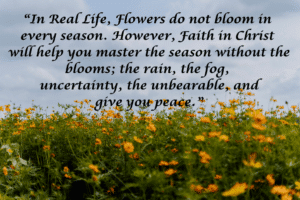
- Enduring joy: Peace is found in Christ’s presence alongside the pain, not in the absence of it.
Our Response to the Thorns in Our Lives
- Surrender the timeline: Stop demanding immediate relief and start asking for daily endurance.
- Shift the prayer: Move from asking “Why is this happening?” to “How can God use this?”
- Lean into community: Share your weaknesses honestly instead of hiding them behind a mask of perfection.
- Boast in the brokenness: Let your struggles be the proof that God is sustaining you.
- Keep moving forward: Serve, love, and live fully today without waiting for the thorn to vanish.
Final Thought:
Don’t waste your thorn. When we stop fighting the reality of our weakness, we finally experience the reality of His strength. It is in our emptiest moments that His grace fills us to overflowing.
“I can do all things through Christ which strengtheneth me.” Philippians 4:13 (KJV)
What Was Paul’s Thorn In The Flesh?
Calmness in The Midst of Distress And Chaos With God