Who Was David in the Bible? A Powerful Story of Faith, Failure, and Redemption
Who Was David in the Bible? A Powerful Story of Faith, Failure, and Redemption
Who was David in the Bible, and why does his story still matter today?
David is one of the most well-known and deeply studied figures in Scripture. His life was not perfect, yet it was powerful. He was a shepherd, a warrior, a king, a poet, and most importantly, a man after God’s own heart.
His story reminds us that God does not look for perfection—He looks for a willing heart.
David’s Humble Beginnings
David’s story begins in an unexpected place—not in a palace, but in the fields.
He was the youngest son of Jesse, overlooked even by his own family when the prophet Samuel came to anoint the next king of Israel.
1 Samuel 16:7 (KJV)
“…for man looketh on the outward appearance, but the Lord looketh on the heart.”
While others saw a shepherd boy, God saw a king.
David spent his early years tending sheep—developing courage, responsibility, and trust in God. These quiet seasons were not wasted; they were preparation.
David and Goliath: A Defining Moment of Faith
David’s rise to prominence came during one of the most famous battles in the Bible: his encounter with Goliath.
While the Israelite army trembled in fear, David stepped forward with confidence—not in himself, but in God.
1 Samuel 17:45 (KJV)
“I come to thee in the name of the Lord of hosts…”
With only a sling and a stone, David defeated the giant.
This moment wasn’t just about victory; it was about faith over fear. David trusted God when no one else would.
From Shepherd to King
After defeating Goliath, David’s life changed dramatically. He became a national hero, but also a target. King Saul grew jealous and sought to kill him. For years, David lived on the run, hiding in caves and wilderness.
Yet during this time, David did something remarkable: He refused to harm Saul, even when he had the chance.
Why Did David Refuse to Kill Saul
David refused to kill King Saul, despite Saul actively hunting him, because he viewed Saul as “the Lord’s anointed”. David believed God had chosen Saul to be king, and it was not his place to usurp divine authority. He chose instead to wait for God’s timing.
The Essence of His Thinking was:
- Reverence for the “Lord’s Anointed”: Saul was chosen and consecrated by God. David believed that striking down God’s designated king was a sin against the divine order.
- Faith in Divine Sovereignty: David trusted that God, who had made him king, would remove Saul in His own way and time. He preferred to let God exact justice rather than take matters into his own hands.
- Desire for a Clear Conscience: David wanted his future reign to be built on righteousness and divine blessing, rather than the blood of a predecessor.
- Respect for the Office: In the accounts where David catches Saul off guard (such as in the cave at En Gedi and in Saul’s camp), David spares Saul’s life to prove his own innocence and loyalty, refusing to lift a hand against his former king.
This reveals David’s character. He trusted God’s timing rather than forcing his own destiny.
Eventually, David was crowned king of Israel and ruled for 40 years, establishing Jerusalem as the nation’s capital.
Why Was David Described as A Man After God’s Own Heart
He earned this distinction through several key traits:
- Wholehearted Obedience and Desire: He was fundamentally committed to fulfilling God’s purposes. Unlike his predecessor, King Saul, who frequently relied on his own reasoning and pride, David actively sought God’s direction in his decisions.
- Deep Passion for God’s Presence: David’s life, as chronicled in the Psalms, shows a man who valued his relationship with God above the throne or earthly power. He had an intense hunger to know, worship, and experience God.
- True Repentance: David was far from perfect; he committed devastating sins, including adultery and murder. However, when confronted by his mistakes, he did not make excuses. He took full responsibility and immediately sought God’s forgiveness with a broken spirit (as seen in Psalm 51).
- Unwavering Faith: From his youth, David exhibited deep trust in God. His famous victory over Goliath was rooted in his conviction that God is in control and delivers His people.
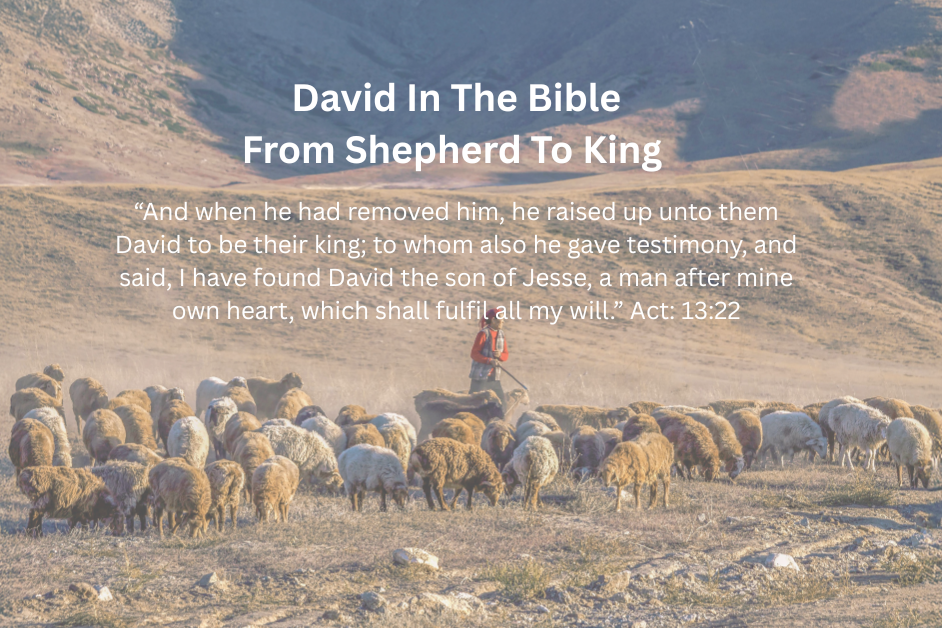
Acts 13:22 (KJV)
“…a man after mine own heart, which shall fulfil all my will.”
But what does that mean? It does not mean David was perfect. It means he had:
- A deep love for God
- A heart of worship
- A willingness to repent when he failed
David wrote many of the Psalms, expressing joy, sorrow, fear, and faith. His words still comfort millions today.
David’s Failures and God’s Forgiveness
David’s story is not without serious mistakes. One of the most well-known is his sin involving Bathsheba. David committed adultery and then tried to cover it up.
This was a turning point—a moment of deep failure. But what sets David apart is what came next.
Psalm 51:10 (KJV)
“Create in me a clean heart, O God; and renew a right spirit within me.”
David repented sincerely. He did not hide from God; he ran back to Him.
This shows us something powerful: God’s grace is greater than our mistakes.
Lessons We Can Learn from David
*Life Lessons And Commandments From the Bible
David’s life speaks directly into our own.
- God Uses the Overlooked
David was ignored by others but chosen by God.
- Faith Overcomes Fear
His victory over Goliath reminds us to trust God in impossible situations.
- Waiting Is Part of the Process
David waited years before becoming king.
- Integrity Matters
He refused to take shortcuts—even when it was hard.
- Repentance Restores
Even after failure, God restored David.
Why David Still Matters Today
David’s story is timeless because it reflects real life.
- He experienced victory and defeat
- He knew joy and heartbreak
- He faced temptation and consequence
- He discovered forgiveness and grace
His life reminds us that we are all in a process and that God is not finished with us yet.
Conclusion
So, who was David in the Bible?
- He was a shepherd who became a king.
- A warrior who trusted God.
- A sinner who repented.
- A man who loved deeply, and was deeply loved by God.
David’s life is a powerful reminder that no matter where you start or how far you fall, God can still use you for something meaningful. If you are struggling with something like “your past sins,” stop and remember King David, his heart, and his repentance.
How Could David Be Called “A Man After God’s Own Heart”?