What Is Truth in a Confused World? Understanding The Truth
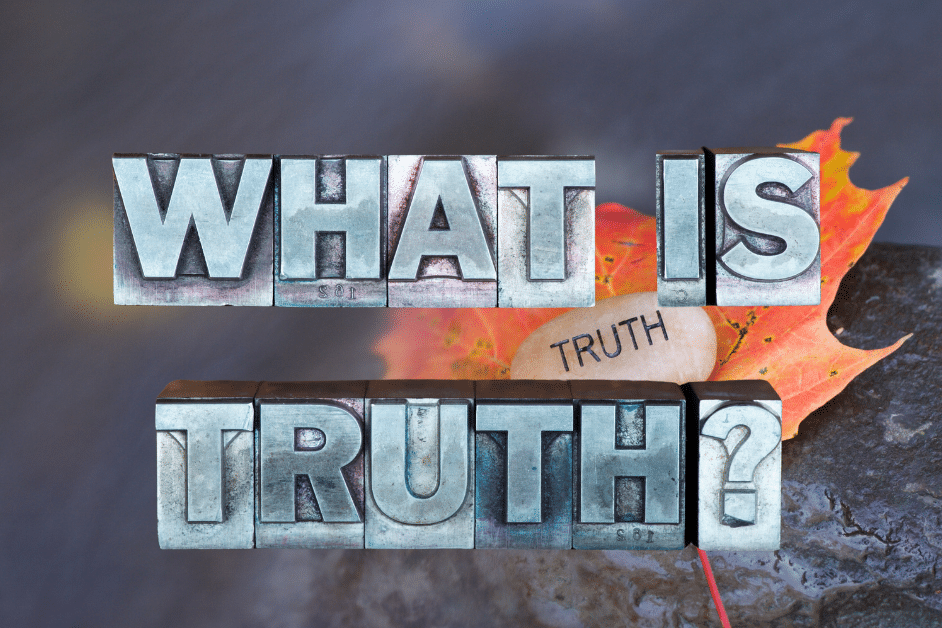
What Is Truth in a Confused World? Understanding the Truth
Truth is not a trend—it is a foundation.
In a world filled with noise, opinions, and shifting values, truth provides clarity, direction, and peace. Here, we explore truth as it relates to faith, discernment, self-awareness, and everyday life—seeking what is real, enduring, and worth building upon.
We live in a time where facts feel harder to recognize than ever before. Every day, we are surrounded by opinions, headlines, social media voices, and personal narratives—each claiming to be the right one. In the middle of all this noise, many people are left asking a simple but critical question: What is truth?
Confusion is no longer the exception; it has become the norm. When the truth feels uncertain, life itself can feel unstable.
Details of What Is Truth
Truth is a complex concept, meaning agreement with fact or reality, often defined as what corresponds to the world, but philosophers also discuss internal consistency (coherence) and usefulness (pragmatism). In daily language, it’s about being real, genuine, or factual, distinguishing objective reality from subjective feelings, though some view it as personal understanding (“your truth”).
- Correspondence Theory: The most common view; a statement is true if it matches reality or facts outside the mind (e.g., “The sky is blue” is true if the sky is actually blue).
- Coherence Theory: A belief is true if it fits logically and consistently within a broader system of other beliefs.
- Pragmatic Theory: A belief is true if it works, is useful, or has beneficial consequences in practice.
- Objective vs. Subjective: Truth can refer to objective, mind-independent facts (e.g., gravity) or subjective perspectives (“my truth”).
- Language & Belief: Truth is often applied to statements, beliefs, and propositions that aim to represent reality.
- Beyond Facts: Some perspectives, like Christian theology, see truth as the ultimate reality embodied in a person (e.g., God or Jesus), linking it to divine revelation and essence, not just facts.
- Christianity: Truth is often viewed as absolute and anchored in the character of God. In the Bible, Jesus is described as “the way, the truth, and the life”.
- Ancient Greek: The word for truth, aletheia, literally means “unhidden” or “uncovered,” suggesting truth is a process of revealing reality.
- Modern Skepticism: Figures like Friedrich Nietzsche argued that “truth” is often just a tool for power or a collection of metaphors we have forgotten are illusions.
In essence, truth is a fundamental concept that anchors our understanding of what is real, factual, and reliable; however, its precise nature remains a subject of ongoing discussion.
Why Truth Feels So Hard to Find Today
One reason truth feels elusive is that we are overloaded with information. We are constantly told to “follow your heart,” “live your truth,” or “trust your feelings.” While emotions are real and important, they were never meant to be the foundation for truth.
Feelings change. Truth does not.
Another challenge is cultural pressure. Society increasingly treats truth as something personal—something each individual defines for themselves. But when truth becomes subjective, it loses its ability to guide, correct, and protect.
Truth vs Feelings
Feelings respond to circumstances. Truth stands firm regardless of them.
When decisions are based solely on emotions, confusion often follows. Anxiety increases. Doubt grows. Direction fades. Without a stable foundation, life becomes reactive instead of intentional.
Truth, on the other hand, brings clarity. Even when it is uncomfortable, truth provides something emotions cannot: direction.
The Cost of Living Without Truth
A world without truth is not free—it is fractured.
When truth is ignored or replaced with convenience, people experience:
- Inner conflict
- Moral confusion
- Loss of purpose
- Emotional exhaustion
We were not created to drift. We were made to live with meaning.
Why We Are Drawn to True Facts of Life
At our core, we long for something solid—something reliable. Truth answers the deeper questions of life:
- Who am I?
- Why am I here?
- What really matters?
Reality does not restrict us. It grounds us.
A Gentle Step Toward Something Greater
For many, the search for truth eventually leads beyond human reasoning and into something deeper—faith.
Truth is not something we invent; it is something we discover.
Truth is not outdated. It is essential.
How do you live your true self and reality, and what matters to you the most about what you know as being true? Think about it.